First Marathon Fueling Tips (I Wish I Knew)
February 24, 2026 — 5 min read
I've run marathons and ultras at this point, but when I started training for my first one, I had no idea what I was doing with nutrition. I trained my legs but completely ignored my gut. Paid for it on race day.
Here's what I wish someone had told me:
Why You Should Practice Fueling on Every Long Run
Not because you'll bonk on a 50-minute run, but because that's your training ground. Your gut needs weeks to adapt to processing fuel at effort. Race day is not the time to figure this out.
When to Start Fueling During a Marathon
First fuel at 15 minutes in, then every 20–30 minutes after. Small amounts, consistent timing. Think of it like keeping a campfire going with small sticks rather than waiting for it to die and throwing a log on.
Why Sodium Matters for Carb Absorption
This one surprised me. It's not just about cramps or hydration. Your body actually needs sodium to absorb the carbs you're taking in. Without it, that gel just sits in your stomach making you miserable.
How Many Carbs Per Hour for Your First Marathon
If you've never fueled during training, start around 30–40g of carbs per hour on your long runs. Build to 60g/h over 4–6 weeks. Focus on timing first, dial in amounts later. This is enough for most first marathons.
Cheap Fueling Alternatives That Actually Work
Maple syrup or honey with a pinch of sea salt works. Brings the cost per "gel" from $2–4 down to maybe 30 cents. The fundamentals matter more than the brand.
Or let PODIUM handle the math
This stuff isn't complicated, but it's a lot to keep track of mid-run when your brain is foggy and your legs are asking questions you don't want to answer.
That's actually why I built PODIUM. It calculates your carb and sodium needs based on your workout, then tells you when to fuel with audio cues so you don't have to think about it.
All the math from the tips above, handled for you.
Frequently asked questions
// FREE RESOURCE
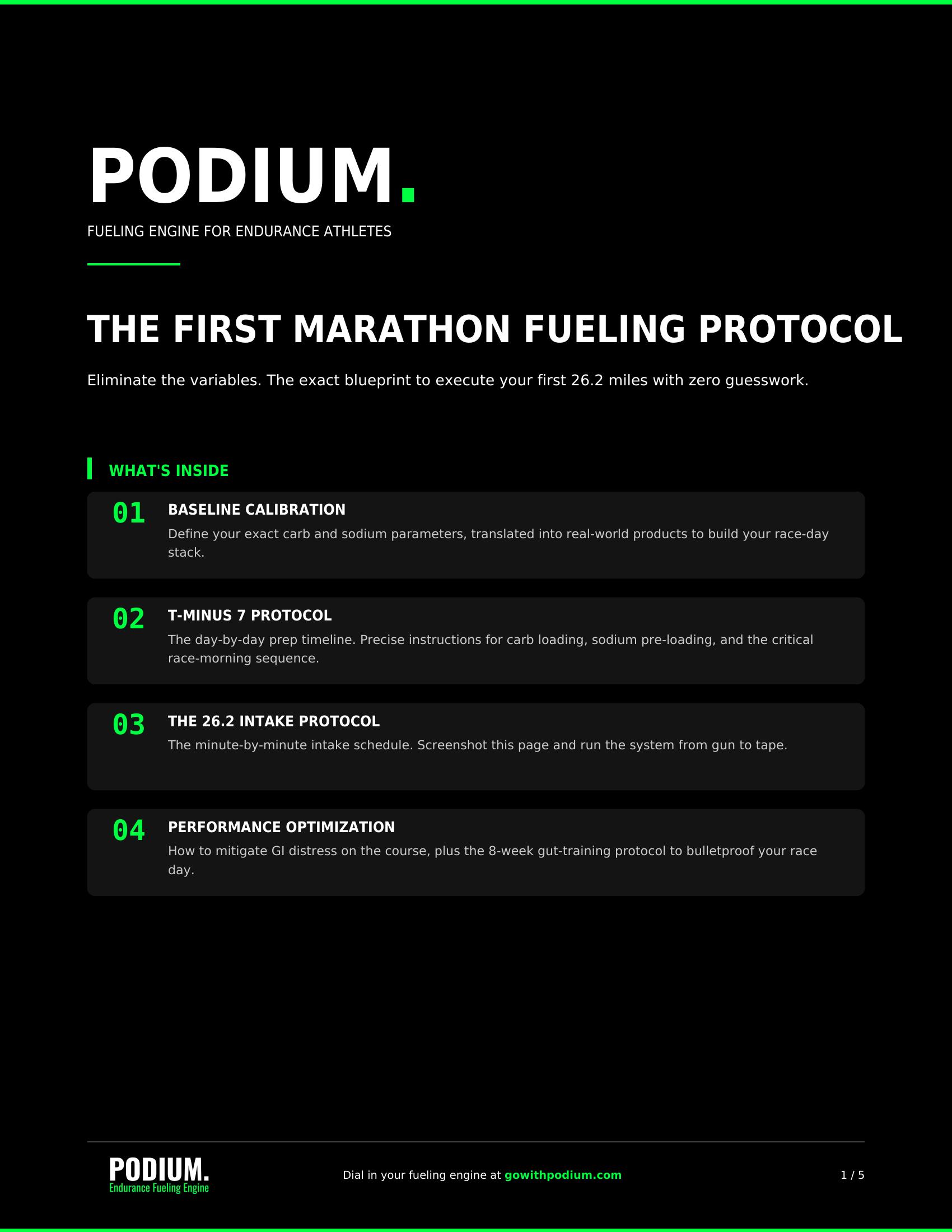
The First Marathon Fueling Protocol
The exact fueling blueprint to execute your first 26.2 miles with zero guesswork.
- •Carb & sodium guidelines
- •Race week and race day fueling timeline
- •Gut training program