How PODIUM's Algorithm Works
March 11, 2026 — 9 min read
Over the past six articles, we've walked through every piece of the fueling puzzle.
- How to find your carb target.
- Why sodium matters.
- When to fuel and how often.
- How to train your gut.
- What to look for on a gel label.
- How to make your own fuel at home.
You now know enough to build a race-day plan from scratch.
PODIUM does all of that thinking for you — then goes a step further.
It tells you exactly what to eat and when, based on the actual products in your pockets.
Here's how the algorithm makes its decisions.
Set your baseline
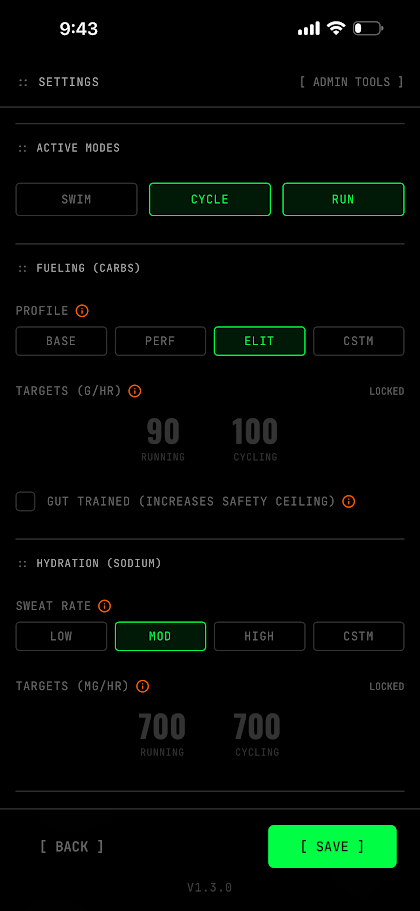
The app starts with your experience level:
- Foundation: athletes newer to fueling
- Performance: athletes who've been practicing for a while
- Elite: athletes with trained guts who can push higher intake rates
This sets your starting carb tolerance — the hourly rate your gut can reliably handle right now.
It's the same framework from this article: How Many Carbs Per Hour? A Practical Guide for Runners & Cyclists
Running and cycling have different baselines because of how they stress your gut differently. Cycling is stable and seated. Running involves constant impact. The app accounts for that.
This baseline is your anchor. Everything else adjusts from here.
Apply the workout context
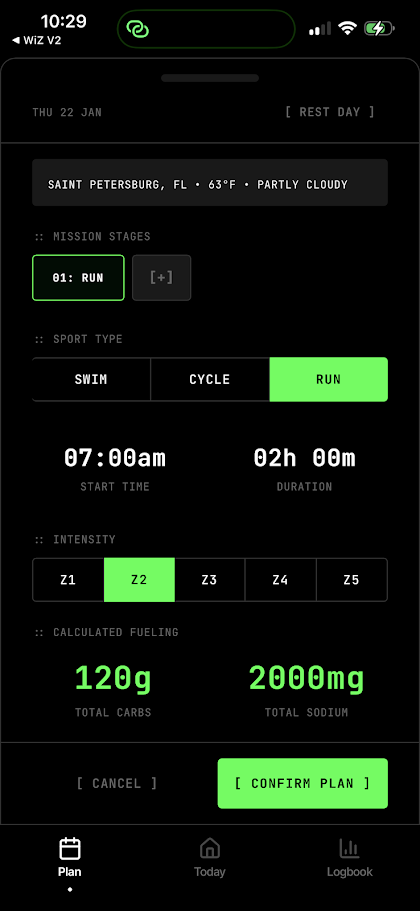
When you enter a workout, the algorithm adjusts your baseline based on what you're actually doing.
- Duration matters. Shorter workouts need less fuel — or none at all. Longer workouts need more. The app knows when to skip fueling entirely, when to use a half dose, and when to bump your target up for really long efforts.
- Intensity matters too. Harder efforts burn through glycogen faster, so the target scales up. An easy Zone 2 long run and a Zone 4 tempo session don't get the same recommendation, even if they're the same duration.
The general rule: the longer and more intense the activity, the more carbs you need beyond your baseline.
Female athletes get a slight adjustment based on physiology. There's also an option to account for luteal phase, when your body needs a bit more fuel coming in.
Sport-specific caps keep things realistic. Running targets stay lower than cycling because your gut can't handle as much while it's getting bounced around. We covered why that matters here: The Gut Training Protocol
Couple sodium
Sodium isn't calculated separately. It's paired with carbs because that's how your body absorbs them — together.
We covered the science here: Sodium Isn't Just for Cramps
The app uses your sweat profile to set a sodium baseline. Light sweater, moderate sweater, heavy sweater — you probably already know which one you are.
From there, it adjusts. Higher carb targets get a sodium bump because your gut needs more sodium to keep up with absorption. Hot conditions increase the target further.
You get one combined recommendation. Not two separate systems to manage. Carbs and sodium, calculated together, delivered together.
Build the script
This is where PODIUM does something no spreadsheet can.
Before your workout, you tell the app what fuel you're carrying. Which gels, how many, what's in your bottle. Your actual inventory.
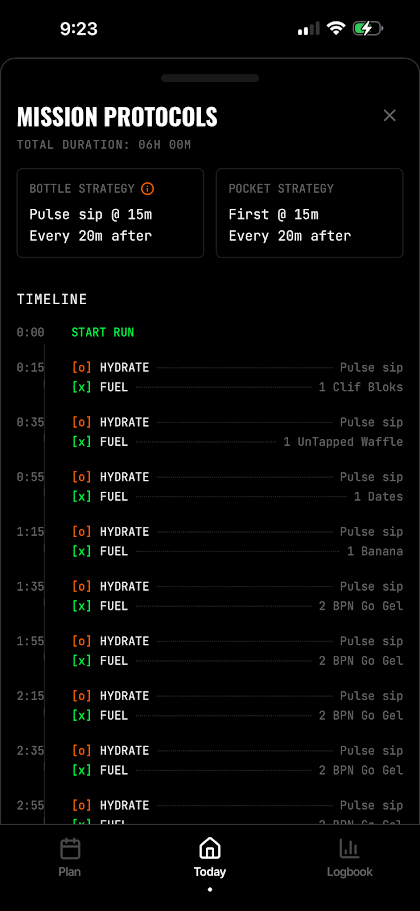
The app maps that inventory against your carb and sodium targets for the session. Then it builds a minute-by-minute fueling script for that specific workout.
It accounts for the fact that your gels aren't perfectly sized thirds of your hourly target. For pouches, it rounds to simple fractions — half, quarter — instead of abstract gram counts.
The output is plain language. "Take one gel now." "Half a pouch now." "Sip your bottle." No mental math required.
The timing follows the 20-minute pulse we covered here: The 20-Minute Pulse
First cue at minute 15. Then every 20 minutes after that. The script is built around your products, your targets, and that rhythm.
Execute
Press start.
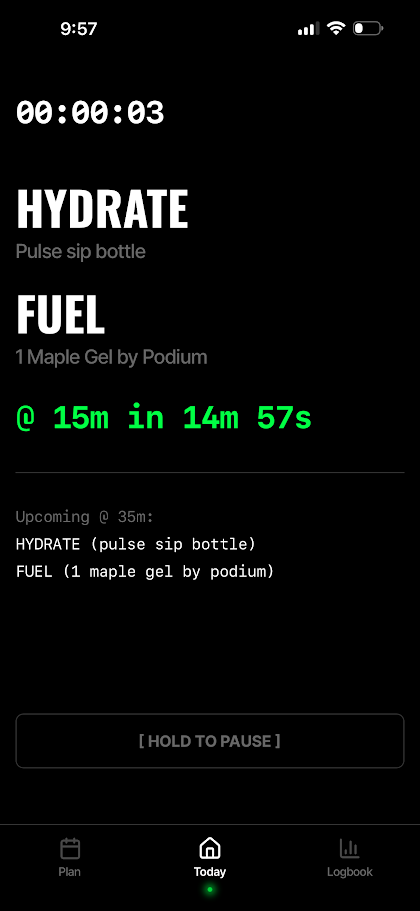
Every 20 minutes, you hear an audio cue telling you what to take. Not a generic beep. A specific instruction based on the script the app already built.
No mid-run math. No checking your watch. No trying to remember if that was your second gel or your third.
The algorithm did the planning before you started. The audio cues handle the execution while you're moving. You just run.
You could do this manually
Everything in this article, you could do yourself.
- Build a spreadsheet.
- Set watch timers.
- Do the math on your gel labels.
- Track your inventory.
- Calculate your sodium based on the weather.
- Adjust for intensity.
- Remember what you've eaten mid-run.
Some people prefer that. And the articles in this series give you everything you need to do it.
But the value of PODIUM isn't the math. It's that you don't have to think about any of this while you're running.
The algorithm handles the planning. The audio cues handle the execution. You just run.
Frequently asked questions
Bring it home
You tell it who you are, what you're doing, and what you're carrying. It tells you what to eat and when.
That's it.
// FREE RESOURCE
The First Marathon Fueling Protocol
The exact fueling blueprint to execute your first 26.2 miles with zero guesswork.
- •Carb & sodium guidelines
- •Race week and race day fueling timeline
- •Gut training program